Weed in Nantes: Context, Reality and Risks
Introduction
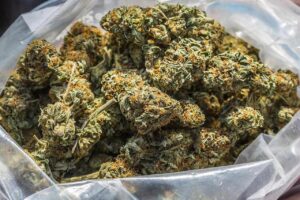
Nantes, like many European cities, has seen the presence of cannabis (commonly called “weed,” hashish or “hasch”) for decades. Despite strict legal prohibitions, cannabis remains widely used — both sporadically and regularly — among various segments of the population. This article explores how weed appears in the social fabric of Nantes today: who uses it, how common it is, what the law says, what risks and harms are associated, and what the future might hold.
1. The Prevalence of Cannabis Use in France and by Extension to Nantes
Although fine-grained, city-level data for Nantes are hard to obtain publicly, national data gives a sense of the broader environment in which Nantes exists. Across France, cannabis remains the most widely used illicit substance. (en.ofdt.fr)
According to a recent report: among adults (age 18–64), over 50% have tried cannabis at least once in their lifetime; in 2023, about 10.8% reported having used it in the past 12 months. Regular use (defined as use at least 10 times in the last 30 days) is at ~ 3.4%. (drugpolicyfacts.org)
These figures suggest that many people in Nantes — especially younger adults and those in nightlife or social circles — may have had exposure to cannabis. Historically, the city’s counterculture and social scenes provided spaces (parks, alleys, social events) where hashish and weed were used. (Puppies Guide)
A recent study among festival attendees in France, including participants from the region around Nantes, found “a high rate of regular users reporting social or health consequences,” and a strong association between cannabis use and use of other substances (stimulants or hallucinogens). The authors emphasized that such settings may require serious harm-reduction efforts. (SpringerLink)
Thus, while not everyone in Nantes uses cannabis, the social and festival environments, combined with national prevalence rates, indicate that cannabis remains present and relevant.
2. Legal Status: What the Law Says in Nantes (i.e. in France)
It is important to underscore: in Nantes — as in all of France — cannabis is illegal for recreational use. (LegalClarity)
More specifically: under the Code de la santé publique (Public Health Code), Article L3421-1 defines illicit use of narcotics (which includes cannabis) as illegal, punishable by up to one year in prison and a fine of up to €3,750. (Norton Rose Fulbright)
Since September 2020, for possession of small quantities (typically for personal use), many cases are handled via a fixed on-the-spot fine (the “amende forfaitaire délictuelle”) rather than full prosecution. (LegalClarity)
- The standard fine is €200
- If paid promptly (within 15 days), the fine can be €150
- If paid after 45 days, it may increase to €450 (LegalClarity)
However: more serious offences — possession of larger quantities, trafficking, sale, cultivation — carry much heavier penalties. Cultivation alone can bring up to 20 years in prison and a €7.5 million fine under the criminal code. (allaboutlawyer.com) Sale, trafficking, transport or acquisition likewise can lead to up to 10 years imprisonment and a €7.5 million fine. (allaboutlawyer.com)
Also noteworthy: the law prohibits not only use and possession, but also the “favourable presentation” of narcotics (for instance, promoting them or urging use). Under Article L3421-4, this is punishable by up to 5 years’ imprisonment and a €75,000 fine. (Wikipedia)
Hence, the legal framework applying to Nantes is strict. There is no difference between residents, visitors, or tourists: all are subject to the same rules. (cannainsider.com)
In practice, however, enforcement tends to vary: for small amounts and first-time use, police often impose the fixed fine rather than initiate full criminal proceedings. (LegalClarity)
Regarding cultivation: even growing cannabis for personal use is strictly forbidden. (allaboutlawyer.com)
In contrast: hemp-derived products with minimal THC — typically CBD with THC below a threshold (e.g. < 0.2% or 0.3%) — have gained some legal traction in France and can be sold (in non-smokable forms) under regulation. (cannainsider.com)
Thus, although cannabis use is common, it exists in tension with a legal system that criminalizes it—making every act of use, possession or distribution a potential legal risk.
3. Cannabis Culture in Nantes: Reality, Risks, and Social Context
Even under prohibition, cannabis remains part of the informal social fabric in Nantes. As noted earlier, many young adults, people attending festivals or nightlife events, have tried or regularly use cannabis. (drugpolicyfacts.org)
Festivals, concerts and party scenes appear particularly relevant: a 2024 study of festival-goers noted “frequent cannabis dependence” and a high proportion reporting health or social consequences tied to use. (SpringerLink)
But these contexts also pose higher risks — not only from possible legal sanctions, but from potential substance dependence, mixing with other psychoactive drugs, and health harms. The study concluded that festivals may be key arenas for implementing “harm reduction measures.” (SpringerLink)
Moreover, in many such settings, weed is typically obtained via informal or underground networks — black-market distribution remains the norm, since there is no legal channel for THC-rich cannabis sale. (cannainsider.com)
This underground market adds further risks: unregulated supply means inconsistent quality (potency may vary, risk of adulteration), uncertainty about origin, and potential legal consequences if caught with even small amounts.
Therefore, the cannabis culture in Nantes exists under a shadow: known and widespread socially, but illicit — putting users at legal and health risk.
4. Health, Dependence, and Social Consequences
While debate continues globally about cannabis as a “soft drug,” recent research underscores that cannabis is not risk-free. Especially among frequent users, or users mixing cannabis with other substances, dependence and negative health or social consequences are real. The 2024 festival-attendee study mentioned above is one example: regular cannabis users frequently reported adverse effects, and many also used stimulants or hallucinogens — a pattern associated with greater risk. (SpringerLink)
Beyond that: although national-level data indicates lifetime use by many, daily or regular use remains a minority. For example, in 2021 regular cannabis use (monthly or more) in the region including Nantes (Pays de la Loire) was lower than in some other regions: the 2022 national survey found ~ 5.0% monthly use and ~ 2.9% “regular use” in that region. (en.ofdt.fr)
Still — for those who use heavily — risks may include dependence, mental health effects, social disruptions (work, studies, relationships), and the added dangers associated with unregulated supply (impurities, variable potency).
The festival-study’s authors argued for strengthened harm-reduction: safer-use information, access to substance-use counselling, and health services for attendees. (SpringerLink)
Social consequences also matter: cannabis use — even minor possession — can result in legal penalties, fines, potential criminal record (especially with repeated offences), which may affect employment, housing, or travel.
Moreover, the negative stigma attached to drug use — reinforced by law — may discourage users from seeking help, even when use becomes harmful.
5. Why Some People Still Use — Despite the Risks
Given the legal risks and health concerns, why does cannabis remain popular in Nantes (and more widely France)? Several overlapping factors help explain:
- Social and cultural factors. For many young adults, festivals, nightlife, parties, peer groups, curiosity or rebellion — cannabis remains a symbol of social bonding or countercultural identity. The historical presence of cannabis in French and European counterculture continues. (Puppies Guide)
- Perceived risk vs reality. Many users likely perceive the fixed fine system as a ‘mild’ punishment compared to imprisonment. For small amounts and first-time use, police often issue the fine rather than pursue prosecution. (LegalClarity)
- Availability via informal networks. Although cannabis sale is illegal, the black market continues to supply demand; in nightlife or festival contexts supply is often readily available, which sustains use. (cannainsider.com)
- Limited alternative (legal) products. While CBD-based hemp products are legal under certain THC thresholds, these produce different effects than THC-rich cannabis, and for many users they do not substitute for the psychoactive effects sought. (cannainsider.com)
Thus, the tension between demand (social, cultural, recreational) and prohibition creates a persistent, widespread — though illicit — cannabis culture in Nantes.
6. Law Enforcement, Public Policy and Challenges
Because cannabis remains illegal in France, enforcement is ongoing. Since 2020 the fixed-fine system for simple possession has become common: this is intended to reduce burden on courts while still penalizing use. (LegalClarity)
Yet—even with fines—the law allows for imprisonment and heavier punishments for more serious offences (trafficking, cultivation, sale, distribution). (allaboutlawyer.com)
Moreover, the criminalization extends beyond use: promotion, favourable presentation or public glorification of cannabis is also punishable. (Wikipedia)
Recent trends at national and local levels show some cautious evolution: regulated access to certain cannabis-derived medical products (under strict conditions) is being discussed. (Norton Rose Fulbright)
Still, as of 2025, recreational use remains illegal, and broad legalization does not appear imminent. The government and law-makers continue to frame cannabis as a narcotic substance, penalized under health and criminal codes. (Norton Rose Fulbright)
From a public-policy perspective, this creates challenges: on one hand, prohibition aims to curb use and trafficking; on the other hand, heavy criminalization pushes use underground, limiting harm-reduction and public-health outreach — which might worsen health and social harms rather than reduce them.
Some critics argue that the current approach fuels a cycle where many users — especially young adults — are exposed to legal risk, social stigma, and health dangers, without the benefits of regulated quality control or medical supervision.
7. Potential Changes: Medical Cannabis, CBD, and the Future
In recent years, there has been growing discussion in France about regulated access to cannabis-derived products for therapeutic use. Under French law, there is a pilot program for medical cannabis (though access remains tightly regulated). (cannainsider.com)
Meanwhile, many hemp-derived products — especially those high in CBD but low in THC — have gained legal ground, as they don’t carry the same psychoactive effect. These products (oils, tinctures, cosmetics) are sold legally under regulation (when THC content is below threshold, e.g. 0.2%–0.3%). (cannainsider.com)
For residents of Nantes (or France generally), that means there are legal alternatives to THC-rich cannabis — though not substitutes in effect. For some users, especially those attracted by the psychoactive “high,” these legal hemp/CBD alternatives may feel unsatisfactory.
Given shifting public attitudes, continuing research, and pilot medical programs, it’s possible the regulatory landscape may evolve in coming years. But as of now (2025), broad legalization — especially recreational — remains off the table. The law still criminalizes use, possession, cultivation, sale, and public promotion.
8. Implications for Individuals — What Users or Residents Should Know
For anyone living in or visiting Nantes, the following points are critical:
- Illicit status: THC-rich cannabis remains illegal. Possession (even small amounts) may result in fines or criminal charges. (LegalClarity)
- Risk is real: Even with the fixed-fine system, the risk of criminal record, legal trouble, confiscation remains — especially with repeated offenses, larger quantities, or involvement in sale/trafficking.
- Quality and safety are uncertain: Because cannabis is distributed via informal, black-market networks, quality (potency, purity) is unregulated — raising health concerns.
- Harm to health & social life: Regular or heavy use may lead to dependence, mental-health issues, social or work/academic consequences. Exposure to other substances (especially in nightlife/festival contexts) adds risk.
- Legal alternatives (CBD) exist, but do not replicate psychoactive effects; and their legal status is regulated (THC thresholds, permitted forms, etc.). (cannainsider.com)
- Potential changes, but no guarantee: Medical-cannabis pilot programs and CBD regulation show evolving attitudes — but recreational legalization is not yet on the horizon.
Hence, using or obtaining cannabis in Nantes is not only socially risky, but legally risky — and should be approached with full awareness of the consequences.
9. Broader Social and Public-Health Challenges
The presence of cannabis in Nantes (and France) raises broader social and public-health questions:
- Underground markets: Criminalization pushes demand into unregulated black markets — making supply unmonitored, quality uncertain, and pushing users away from harm-reduction services.
- Inconsistent enforcement: While small-scale possession may lead only to fines, heavier offences get harsher penalties. This inconsistency complicates prevention, outreach and policy effectiveness.
- Stigma and marginalization: Users — especially frequent or dependent ones — may avoid seeking help due to stigma, fear of legal consequences, or social ostracism.
- Need for harm reduction: As research shows (festival study, etc.), there is a real need for harm-reduction, education, counselling and support services for users — especially in contexts (festivals, nightlife) where use is common. (SpringerLink)
- Policy dilemma: Authorities must balance between public health, criminal law, social order — but also consider whether prohibition effectively reduces harm, or inadvertently increases risk by pushing use underground.
10. Conclusion: Weed in Nantes — Between Reality and Risk
Cannabis (weed) continues to exist — in social spaces, nightlife, festivals, among many young adults — in Nantes and across France. Although many have tried it, regular or heavy use remains a minority. National data show that over 50% of adults have tried cannabis at least once — but only a small fraction uses regularly. (drugpolicyfacts.org)
At the same time, the legal framework remains strict: recreational use, possession, cultivation, sale or trafficking of cannabis are prohibited. The law allows for a fixed fine for minor possession, but serious penalties remain for larger offences. (LegalClarity)
This legal-social hypocrisy — widespread use + enduring prohibition — places many users in precarious positions. Underground markets, unregulated supply, uncertain enforcement, health risks, social stigma: all contribute to a complex reality.
Recent developments — limited medical-cannabis programs, regulated CBD products — show possible paths forward. But for now, recreational cannabis remains illegal, and the risks (legal, social, health) remain real. Anyone considering use should be aware of those risks.
For policy-makers, educators, health professionals and community groups: the challenge is to balance enforcement with public-health — ensuring that harm reduction, outreach, support and education are available, rather than simply criminalizing consumption and pushing it underground.
Selected Outbound Resources & Further Reading
- Is Weed Legal in France for Recreational or Medical Use? — a recent (2025) guide to France’s cannabis policy and penalties. (LegalClarity)
- Cannabis Laws & Travel Guide – France — overview of legal distinctions between recreational cannabis, CBD, and medical cannabis. (cannainsider.com)
- National data on cannabis use in France (2021–2023) — prevalence, trends, regional breakdowns. (drugpolicyfacts.org)
- Recent academic study (2024) of festival-attendees and cannabis dependence — shows health & social consequences connected to cannabis use in festival contexts. (SpringerLink)
Leave a Reply